

August 13, 2026
Europe becomes a very different place once summer ends. Busy Mediterranean resorts begin to quieten, forests turn gold and crimson, vineyards enter harvest season, and historic cities become far easier to explore without the intensity of peak-season crowds.
For travellers leaving the UK, autumn is the perfect time for short European escapes. From Alpine scenery in Germany and Slovenia to warm days in southern Spain and Portugal, some of the best autumn destinations in Europe are only a short journey away.
Whether you want colourful landscapes, food and wine, hiking, cultural city breaks or a final dose of sunshine, this 2026 guide covers the best places to visit in Europe in autumn and explains which destination suits each type of trip with your Schengen visa UK.
Yes. Fall is widely considered one of the best times to visit Europe, as September, October and November sit between Europe’s peak summer period and the winter holiday season, creating excellent opportunities for travellers who value experiences over crowded attractions, with lower prices on flights and lodging. Below are some of the reasons why autumn is the best time for European adventure.
Popular European cities and attractions are generally quieter in autumn, making sightseeing more relaxed and enjoyable.
Autumn brings cooler, more comfortable temperatures, ideal for walking, sightseeing, and outdoor activities.
It’s a great time to experience wine harvests, seasonal food, local festivals, and fresh regional produce across Europe.
Flights, hotels, and tours can often be more affordable than during the peak summer travel season.
Note:- Southern Germany, Northern Italy, and Switzerland are particularly associated with foliage, harvest traditions, and seasonal celebrations.
The best autumn destinations in Europe vary depending on your travel style, interests, and preferred weather. Choosing among so many destinations is difficult, as Europe holds some of the best heartfelt locations that make it worthwhile to visit even once in a lifetime. Here are some of the best autumn destinations in Europe to visit with your Schengen visa appointment in advance of your travel dates.
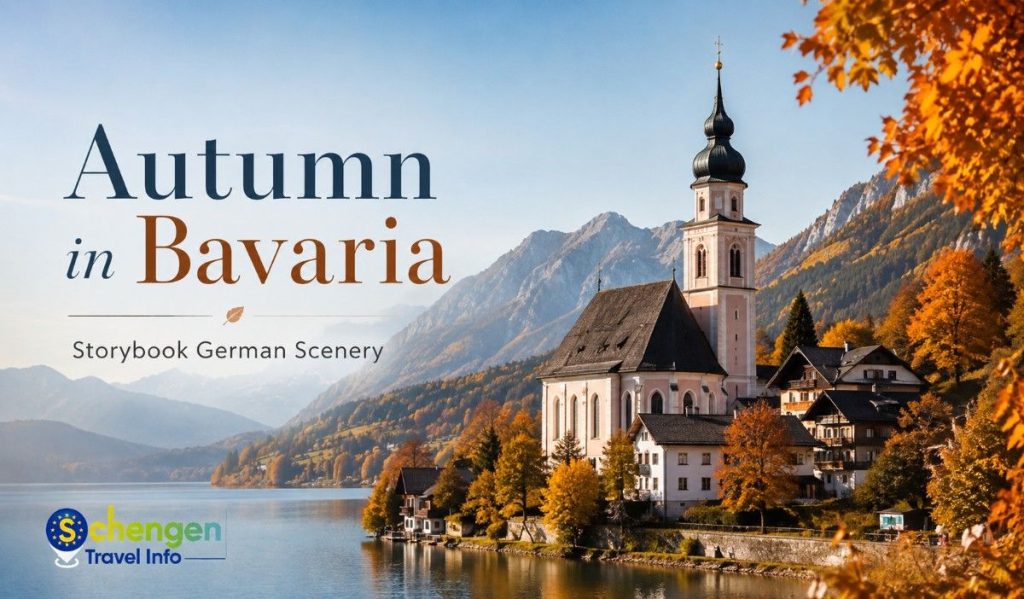
If your idea of autumn involves forests glowing orange beneath castles and mountain peaks, Bavaria should be near the top of your list.
Bavaria is one of the best autumn destinations in Europe, as Southern Germany becomes particularly atmospheric during September and October. Munich makes a convenient starting point, but the real autumn experience begins once you head towards the Bavarian Alps.
Neuschwanstein Castle near Füssen is one of the region’s standout locations. Surrounded by wooded hills, its fairytale architecture becomes even more dramatic as the surrounding forest changes colour. La Vie En Marine specifically highlights Neuschwanstein as one of Europe’s most attractive autumn locations.
Munich also gives September travellers the opportunity to experience Oktoberfest, while other towns across southern Germany host harvest celebrations, folk festivals and seasonal events.
Best time: Late September to mid-October
Best for: Couples, photographers, road trips and traditional autumn atmospheres.
Don’t miss: Neuschwanstein Castle, Füssen, Munich and the Bavarian Alps
Northern Italy combines dramatic mountains, excellent food and some of the best autumn destinations in Europe for photographers and hikers.
The Dolomites are particularly striking when golden larch trees contrast against pale limestone peaks. Cooler conditions can also make walking more comfortable than during the hottest summer weeks, although mountain weather becomes increasingly unpredictable later in the season.
Happy to Wander identifies Northern Italy as one of Europe’s standout autumn regions, highlighting both the Dolomites and the seasonal food culture of Emilia-Romagna.
You can combine several days around Cortina d’Ampezzo, Val Gardena or the surrounding valleys with a city break in Verona, Venice or Bologna.
Food is another reason to travel during this period. Autumn brings mushrooms, chestnuts, grapes and truffles onto menus across northern and central Italy.
Best time: September to early October
Best for: Hiking, photography, food and mountain scenery
Don’t miss: Val Gardena, Cortina d’Ampezzo, Lago di Braies and scenic mountain passes
Slovenia deserves considerably more attention from British travellers looking beyond Europe’s obvious city-break destinations.
Kranjska Gora sits among the Julian Alps close to Slovenia’s borders with Austria and Italy. Its combination of mountains, lakes and forests makes it one of the best European destinations for autumn if scenery is your priority.
Lake Jasna provides mountain reflections close to town, while nearby Zelenci Nature Reserve offers wetlands, vivid water and forest scenery. Both locations become particularly photogenic once autumn colours reach the surrounding landscape.
A longer trip can include Lake Bled, Lake Bohinj and Ljubljana, turning Slovenia into an excellent five-to-seven-day autumn itinerary.
Best time: Late September to October
Best for: Nature, quiet trips, couples and photography
Don’t miss: Lake Jasna, Zelenci Nature Reserve, Lake Bled and Lake Bohinj
Prague deserves a place among the best autumn destinations in Europe as it already feels atmospheric throughout the year, but autumn suits the city’s Gothic towers, cobbled streets and riverside viewpoints exceptionally well.
Walk across Charles Bridge early in the morning before exploring Prague Castle, Malá Strana and the Old Town. Parks and hills around the city add seasonal colour, making viewpoints such as Petřín particularly appealing.
The advantage of Prague is that poor weather does not ruin the trip. Historic cafés, breweries, museums, galleries and restaurants provide plenty of alternatives when rain arrives.
Happy to Wander also identifies Prague as a strong autumn destination, noting the benefit of more manageable conditions compared with peak summer.
Best time: October
Best for: Weekend breaks, architecture, history and couples
Don’t miss: Charles Bridge, Prague Castle, Old Town Square and Petřín Hill
For travellers who prefer vineyards and medieval villages to dramatic mountains, Tuscany offers a completely different autumn experience.
September and October coincide with an important agricultural period across Italy. Vineyards become busy with grape harvests, seasonal produce appears in restaurants, and countryside temperatures gradually become more comfortable for exploring.
Base yourself in Florence if museums and architecture are priorities, or stay around Siena, Montepulciano, Pienza or the Chianti countryside for a slower trip.
Autumn is especially suitable for travellers interested in food because menus increasingly feature mushrooms, chestnuts, truffles and rich regional dishes.
Best time: September to late October
Best for: Wine, gastronomy, road trips and romantic breaks
Don’t miss: Florence, Siena, Val d’Orcia, Montepulciano, and Chianti
Croatia is usually associated with Dubrovnik, Split and Adriatic beaches, but one of its most impressive and best autumn destinations in Europe that lies inland.
Plitvice Lakes National Park contains interconnected lakes, waterfalls, forests and wooden walking routes. During autumn, the surrounding woodland changes into shades of yellow, orange and red, creating a dramatic contrast with the water.
La Vie En Marine highlights the lakes as one of Europe’s strongest locations for seeing autumn foliage.
Visiting outside midsummer can also provide a very different experience from Croatia’s busiest travel period.
For a longer holiday, combine Plitvice with Zagreb or continue towards the Croatian coast.
Best time: Late September to October
Best for: Nature, walking and photography
Don’t miss: The lake trails, waterfalls and panoramic viewpoints
Not everyone wants scarves, mountains and falling leaves. If you are searching for the best places to visit Europe in autumn 2026 while still hoping for warmer conditions, southern Spain should be high on the shortlist.
Seville’s intense summer heat can make extensive sightseeing uncomfortable. Autumn provides a more practical period for exploring landmarks such as the Real Alcázar, Seville Cathedral and Plaza de España.
Andalusia also gives travellers plenty of options for extending the trip. Córdoba can be reached for a cultural day trip, while Granada, Málaga and smaller white villages can form part of a longer itinerary.
Southern Spain is regularly recommended as an autumn alternative precisely because visitors can explore the region after the strongest summer heat has passed.
Best time: Late September to November
Best for: Sunshine, culture, food and architecture
Don’t miss: Real Alcázar, Plaza de España, Triana and Seville Cathedral

Madeira offers a different interpretation of autumn altogether. Instead of forests and chilly city streets, expect volcanic mountains, Atlantic views, levada walks and subtropical landscapes.
September and October are particularly attractive for travellers who want an active holiday without travelling long haul. Hiking routes lead through forests, mountains and valleys, while Funchal provides restaurants, markets and accommodation for travellers wanting a comfortable base.
Madeira also ranks as one of the best European destinations for autumn for travellers looking for an experience of a lifetime and for travellers who prioritise hiking, outdoor activities and beautiful landscapes.
Best time: September and October
Best for: Hiking, couples, outdoor activities and scenic escapes
Don’t miss: Funchal, Pico do Arieiro, levada walks and Cabo Girão
Note:- Porto and the Doura Valley in Portugal are highly popular autumn destinations for UK travellers. In fact travel industry shows a remarkable 66% year-on-year increase in bookings to this region.
Few countries compete with Switzerland when the Alpine landscape begins transitioning from summer into autumn, thereby making it one of the best autumn destinations in Europe.
Destinations such as Lucerne, Interlaken, Lauterbrunnen and the Bernese Oberland combine mountain scenery with lakes, rail journeys and hiking routes. Golden foliage can transform valleys and lower mountain slopes before winter conditions arrive at higher elevations.
Switzerland also has several traditional seasonal events connected with harvests and the return of livestock from Alpine pastures.
The main disadvantage is cost. Accommodation, restaurants and transport can be more expensive than in Central or Eastern Europe, so Switzerland suits travellers prioritising landscapes over budget.
Best time: September to mid-October
Best for: Scenic rail journeys, hiking, mountains and luxury trips
Don’t miss: Lauterbrunnen, Lucerne, Interlaken and the Bernese Oberland
Copenhagen is one of the best European destinations for UK travellers who want a short city break rather than a full holiday.
Autumn suits the city’s café culture particularly well. Cooler days make exploring bakeries, restaurants, museums and design districts part of the appeal rather than an alternative to outdoor sightseeing.
Walk around Nyhavn, explore Christianshavn, visit Rosenborg Castle and spend time in Copenhagen’s cafés. Tivoli Gardens traditionally embraces the autumn and Halloween period with seasonal displays and events.
The Danish concept of hygge also feels considerably more relevant once evenings become darker and colder.
Best time: October
Best for: Couples, food, design and weekend breaks
Don’t miss: Tivoli Gardens, Nyhavn, Rosenborg Castle and Christianshavn
The ideal destination changes considerably between September and November, so timing should play an important role when choosing the best autumn destinations in Europe. Below are some of the best autumn months to choose to go to the designated location of your choosing.
But while choosing where to go on your European adventure, don’t forget to apply for Schengen visa from UK.
Choose the Dolomites, Tuscany, Madeira, Switzerland or Bavaria.
September works particularly well if you want outdoor activities while retaining some late-summer conditions.
Choose Slovenia, Bavaria, Plitvice Lakes, Prague or Copenhagen.
For travellers primarily searching for autumn colours, October provides some of the strongest options across Central Europe and the Alpine regions.
Choose Seville, Lisbon, Madeira, Rome or other culture-focused European cities.
By November, daylight is shorter and mountain conditions can become less predictable, making southern destinations and museum-rich cities more practical choices.
In conclusion, choosing the best autumn destinations in Europe depends on what you actually want from the season.
For instance, choose Bavaria, Slovenia or Plitvice Lakes if colourful landscapes are the priority. Pick the Dolomites or Switzerland for mountain scenery and outdoor activities. Travel to Tuscany for vineyards and seasonal food, or choose Prague and Copenhagen for easy city breaks.
For travellers hoping to extend summer instead, Seville and Madeira provide a completely different kind of autumn holiday.
That variety is precisely what makes Europe so appealing between September and November. Within a relatively short journey from the UK, you can swap grey skies for Andalusian streets, hike beneath golden Alpine forests, explore historic cities without midsummer intensity, or spend a weekend surrounded by Europe’s most impressive seasonal landscapes.
But before the excitement takes the best of you, don’t forget to fill out your online Schengen visa application UK to get your visa appointment before your travel dates.
Ans. Bavaria, the Dolomites, Slovenia, Tuscany, Plitvice Lakes, Prague and Switzerland are among the strongest destinations for traditional autumn scenery. Seville and Madeira are better choices for travellers seeking warmer conditions.
Ans. October is particularly good for Bavaria, Slovenia, Prague, northern Italy and Croatia if autumn colours are your priority. Southern Spain, Portugal, Greece and parts of Italy are stronger options for travellers looking for milder weather.
Ans. Yes. September can provide an excellent balance between late-summer conditions and shoulder-season travel. It is particularly well suited to Italy, Portugal, Spain, Germany and Alpine destinations.
Ans. Southern Spain, Madeira, the Canary Islands, Malta, Cyprus, Sicily and parts of Greece generally remain among Europe’s better options for travellers seeking autumn sunshine.
Ans. Tuscany, Bavaria, Prague, Slovenia, Copenhagen and the Swiss Alps work particularly well for couples because they combine scenery, restaurants, historic centres and opportunities for short scenic trips.
Ans. British citizens can visit Schengen countries for various travel purposes for up to 90 days in a 180-day period without a Schengen visa. On the other hand, UK residents need a Schengen visa for both short and long stays. So if you’re one of them who needs an urgent visa, our experts at SCHENGEN TRAVEL INFO are here for you and can help you in order to secure your visa before your travel dates. Speak to a visa specialist today!