August 20, 2026
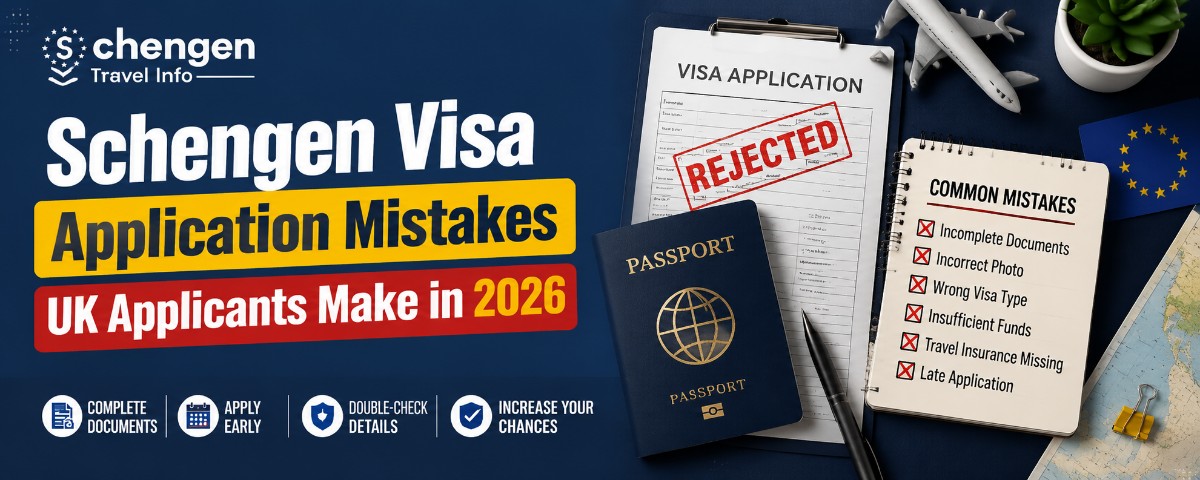
Planning your perfect holiday to Schengen countries is exciting until visa approval comes up! While the visa application looks simple, it is actually a nightmare for many! Even a small mistake can cause visa delays or rejections, derailing your entire vacation plans. Here, we will highlight the most common Schengen visa application mistakes for you!
Our guide will help you know the common errors, from an unclear itinerary to weak return intention, so you can avoid the traps. We will also cover tips to strengthen the application, plus how you can get a Schengen Visa from UK! So keep reading!
For many UK travellers, this might seem like a small error, but it can cause big delays in your travel plans. If you are legally residing in the UK with a digital residency status, then you must attach your eVisa share code! Failing to include your legal residency status can create confusion during document review and even result in rejection by the authorities.
While many think medical travel insurance is just a random checkbox in the visa form; however, it is one of the most important documents to get a visa approved. Without valid travel insurance, your visa can be rejected without a second thought!
UK travellers assume that any medical policy will work, but you need to purchase one that complies with Schengen requirements. It is one of the most common Schengen visa application errors!
So what should a valid travel medical insurance look like?
Weak financial evidence is another common mistake that many UK travellers make in 2026 Schengen applications! Money proof might sound simple, but it can also create trouble for your trip plans!
What applicants assume is that they need to maintain a large bank balance to get the visa approved. Due to this assumption, many applicants make sudden large deposits, which actually raises suspicions with visa authorities.
What the visa authorities really want is a healthy bank balance with regular transactions. You need to prove steady income, money transactions, and funds to support your trip.
So, what are the Schengen visa mistakes to avoid here?
Submitting an ambiguous or too detailed itinerary can also influence the strength of your visa file. Many applicants mistakenly believe they must give a minute-by-minute plan, and this can lead to refusals. For example, 9:00 a.m. at the Eiffel Tower, 10:00 a.m. at the Louvre Museum, and 12:00 p.m. at Notre Dame! Such an over-optimistic and detailed itinerary can raise suspicion.
Then what are visa authorities looking for? Just a genuine outline of your travel dates, where you are going, where you will stay, and how your trip makes sense. So, just focus on including:
Unclear intent to return to your home country is one of the biggest Schengen visa rejection reasons 2026. Even applicants with confirmed bookings and good finances can be refused if they cannot show why they must return to the UK after their trip!
Your travel intent shows why you must visit the country; your return intent proves why you must return to the UK! So, both are equally important. Strong reasons such as business, work, long-term commitments, family, property, etc. prove that you have a strong intention to return!
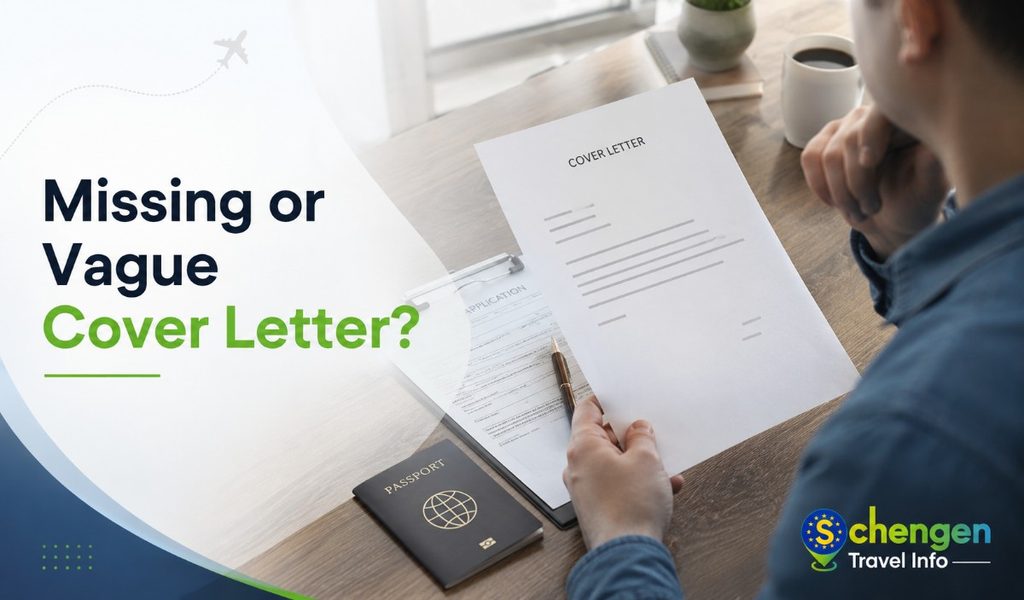
Though a cover letter is optional, it is highly recommended to improve your chances of Schengen visa approval! A missing or vague cover letter often fails to capture your travel intent, financial support, and itinerary.
Hence, an unclear itinerary makes it difficult for the visa authorities to guess why you want to visit a Schengen country. In fact, vague text can also make your travel plan look weak or fake!
So, how can you make sure your cover letter is clear? Read below:
You will be surprised to know that timing can also affect your Schengen visa application! If you submit too early, your documents lose their freshness before a visa decision is made or before your planned trip. Or, if you apply too early, you may miss your trip due to appointment or processing delays.
But you can avoid one of these common Schengen visa mistakes because right planning is everything! Choosing the right timeline will give you enough time to confirm your travel dates, cross-check your paperwork, and correct any inconsistencies before submission!
If you are confused about applying for a visa, then contact Schengen Travel Info! Our experts will help you through the visa process, so you can plan your trip stress-free!
One of the most common mistakes when applying for a Schengen visa is applying for the wrong type of Schengen visa. For instance, if you are going to France for more than 90 days but you applied for a short-stay Type C Schengen visa, it can lead to a visa refusal.
So, selecting the right visa category is critical for quick decision-making and visa approval! So make sure you:
Make sure to navigate the 90/180 day Rule to avoid disruptions in your European gateway.
Applying at the wrong embassy is an important jurisdiction mistake that ultimately results in visa rejection if you do not cancel the appointment in time! Or, you can reapply if the visa application has been refused.
As per the Schengen rules, you must apply to the country which is your main destination, the country where you will spend most of the time, or the country which will be your first point of entry in the Schengen zone!
How to fix the mistake if your appointment is yet to happen
What to do if your application is rejected
Visa authorities expect a clear and believable travel purpose to the Schengen zone. Many UK applicants are refused because their purpose sounds copied, generic, or disconnected from their work profile or leave period.
Unrealistic daily travel or overpacked itineraries also raise doubts about your travel intent.
So, how can you fix this?
Another common mistake applicants make when applying for a Schengen Visa from UK is mismatched dates! Mismatched travel dates refer to the difference in dates between your visa application form and supporting documents such as hotel bookings or flight reservations.
And this can result in visa refusal on the grounds of “reliability of the provided information” or “unclear intention of the trip”. So how can you avoid this issue:
While you may meet the eligibility requirement; however, if your passport is not in good condition, authorities can refuse your visa application.
A damaged passport may have pages that are detached or missing. Or the cover of the passport is damaged. On the other hand, a passport is invalid if:
Under these circumstances, your application does not meet the requirements, leading to visa rejection. So, it is imperative to obtain a new passport before applying for a Schengen visa.
Visa authorities ask for flight reservations to understand your entry/exit plan, travel intent, and duration. However, many applicants use fake or unverified flight reservations, which is a leading reason for visa refusals.
You must know that authorities check your flight booking with the airlines by checking the flight codes of PNRs. So, any fake, cancelled, or unverified ticket is treated as fraud!
So always provide real, verifiable flight tickets. You do not have to provide actual tickets before approval. Getting dummy tickets is sufficient as long as they can be verified by the authorities and match your travel dates!
Previous visa refusals also affect your chances of approval for a new application. And if you do not explain the previous refusals properly, it is a big mistake on a Schengen visa application. It appears as if you are hiding a bad history from the authorities; such an omission results in a quick rejection.
Why does this mistake cause visa refusals:
What to do when your visa was refused before?
If you have applied for a Schengen Visa UK but are unable to demonstrate your place to stay during the visit, your application can be refused. Your accommodation details include a hotel booking, a rental property, or a host’s place. However, if these details are vague or uncertain, such as unconfirmed or fake reservations or mismatched dates, your visa can be rejected.
So, how can you avoid accommodation mistakes?
So, these were the top 15 common mistakes UK applicants make in 2026 while applying for a Schengen visa! And for a quick overview of documents, go through our checklist here!
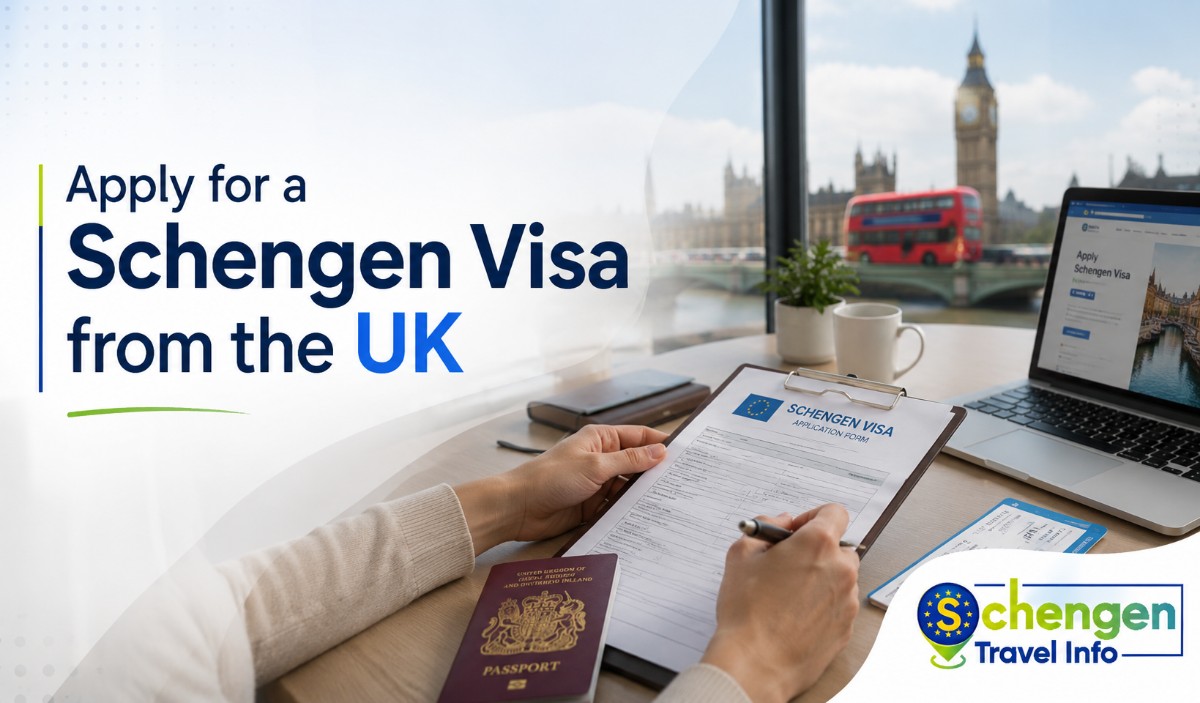
By now you have understood that applying for a Schengen visa is not limited to filling out an online application! It includes the right documents, the right category, the right visa centre, and so on!
And to save you from all the stress, Schenegn Travel Info is here! We can help you get your Schengen Visa Appointment at the right place with the right documents!
Just follow these simple steps below:
Note: In some cases, such as additional checks or peak travel season, visa processing takes up to 45 days. So, make sure you apply on time to avoid unforeseeable delays!
Key Takeway
A. Malta has the highest visa rejection rate of 38%-39% among the Schengen members. This is followed by Estonia (27%), Belgium (26%), and Slovenia (24%).
A. No, you do not get your visa fee refunded if your visa was rejected. You have to pay the visa fees again when applying for a visa with a new application.
A. UK citizens can travel to the Schengen region without a visa for a short stay of up to 90 days withing 180 day period. However, if they wish to stay in the Schengen zone for more than 90 days, they need to get a long-stay (Type D) visa.
A. Most applicants apply for a visa immediately after a refusal. You must ensure that you read the rejection letter properly to understand the issues in your visa file. And only after addressing these issues should you apply for a visa. Don’t reapply with the previous file, but a stronger, fixed file.